This guide is built for traders who want Level 3 approval on Robinhood using safe, defined-risk strategies. It covers how the approval works, what reps listen for, key concepts like spreads and Greeks, common denial mistakes, and what to do once you’re approved, including a mock quiz and a first-48-hours checklist.
Getting Robinhood level 3 options approval can be nerve-wracking, especially when you’re not sure what they want from you. I’ve been through this process myself and have helped others prepare for it, too.
The goal of this guide is simple: I want you to know exactly what to expect before you apply.
Level 3 is not about trying to game the system. It’s about knowing how brokers think about risk and showing that you can trade responsibly. When you understand what Level 3 requires and how defined-risk strategies work, the whole process becomes much easier.
Key Takeaways
- Level 3 on Robinhood is about defined-risk spreads, not wild leverage. You unlock debit spreads, credit spreads, and iron condors—but not naked calls or naked puts.
- Approval is based on suitability, not a secret hack. Robinhood looks at your income, net worth, account activity, and options experience, then decides if your risk profile fits Level 3.
- You need to clearly understand Greeks and risk. Being able to explain delta, theta, vega, assignment risk, and how spreads cap max loss is a big part of sounding prepared and getting approved.
- Honest, consistent answers matter more than fancy jargon. Robinhood reps are listening for clarity, not buzzwords—especially when they ask about your experience, strategies, and risk tolerance.
- The blog includes a 15-question mock Level 3 quiz so you can test whether you actually understand spreads, max loss, margin/buying power, and volatility before you apply.
- Common denial reasons are avoidable. Most rejections come from inconsistent answers, exaggerating experience, being vague about risk, or not understanding assignment/Greeks.
- Getting approved is just the start—how you trade matters more. Once you have Level 3, the smart move is to start with small, defined-risk spreads, monitor positions daily, and size trades so a single loser can’t wreck your account.
- The goal is safety and control, not “beating” the system. If you focus on defined-risk strategies, understand how Robinhood holds max loss as collateral, and respect risk, you’ll be far better positioned than someone rushing in underprepared.
Table of Contents
What Level 3 Options Actually Covers
Level 3 usually unlocks defined-risk multi-leg strategies, which give you more flexibility without exposing you to unlimited losses. I’m talking about spreads, iron condors, and a few variations like diagonals or calendars.
These strategies let you cap your max loss before you even hit “submit.” That’s why brokers are comfortable offering them once they’re convinced you know the basics.
Level 3 does not include naked calls or naked puts. Those require higher approval levels and much more experience because the potential loss can escalate fast.
Level 3 access allows you to:
- Trade multi-leg, defined-risk strategies
- Use debit spreads, credit spreads, and iron condors
- Manage risk with built-in protection
Level 3 does not include:
- Naked calls
- Naked puts
- Uncapped directional selling strategies
How the Approval Process Usually Works
Most users start inside the app with the standard options questionnaire. If your answers raise questions or you request Level 3, you might be asked to complete an additional review.
Sometimes this happens through in-app prompts, and sometimes by phone with a support rep. It depends on the account and your previous history.
The follow-up questions usually take less than ten minutes. Approval can happen the same day or within a few business days. If you’re denied, you can apply again later.
Most brokers suggest waiting at least 30 days before resubmitting, especially if your financial situation or trading experience has changed.
Quick Summary
- Application begins in-app
- Some users get a phone call, others don’t
- Approvals often happen quickly
- Reapply after 30 days if denied
Account Minimums and Suitability Checks
Robinhood doesn’t publish a strict minimum account balance, but most brokers look for signs that you can handle risk responsibly. They tend to consider your income, net worth, trading history, and how active you are in the market.
Higher balances don’t guarantee approval, but they often help because they show you have room to absorb potential losses.
If you have a very small account, Level 3 strategies may not be practical anyway. Credit spreads and condors require collateral. Robinhood uses buying power reduction instead of traditional margin loans, but it still ties up capital.
Quick Summary
- No official minimum, but a larger account helps
- Income, net worth, and activity matter
- Defined-risk trades still require collateral
Real Patterns Behind Robinhood Level 3 Approvals (2024–2025)
If you’re trying to get Level 3 options approval on Robinhood, it’s easy to assume the answer is “just have a big account.” But that’s not the full story.
Based on conversations and shared screenshots from traders (not official Robinhood data), a consistent pattern keeps appearing:
Consistent Level 2 trading experience + being able to clearly explain basic spreads in plain English matters more than raw account size.
Large balances can help, but they don’t replace risk awareness or proof that you understand how to control losses with defined-risk trades.
This doesn’t mean every situation is identical, and Robinhood can change how it reviews applications at any time. These signals reflect what many traders are experiencing in the current environment. The trend is straightforward: a stable history of Level 2 options trades, plus a clear working knowledge of defined-risk spreads, carries more weight than account size alone.
Common Questions Robinhood Might Ask You
Before I list examples, remember this: always answer honestly. The goal is to express clarity, not to pretend you’re a professional trader. Robinhood reps can tell the difference between a prepared person and someone repeating buzzwords.
“How much options experience do you have?”
A strong answer shares a real timeframe and mentions at least one strategy you’ve used.
Example:
“I’ve traded options for about a year. I’ve placed directional trades and a few spreads. I feel comfortable with max profit, max loss, and how positions react to volatility.”
“Do you understand options Greeks?”
You don’t need a lecture prepared, but you should know how delta, theta, and vega affect risk.
Example:
“Yes. Delta shows how sensitive an option is to price movement. Theta tracks daily time decay. Vega measures how volatility changes option value. I use these when planning trades.”
“Do you understand assignment risk?”
They want to hear that you’re aware of what happens if you sell options and something goes in-the-money.
Example:
“Yes. I know assignment can happen any time, especially near expiration. If a short call is in-the-money, I may have to sell shares. A short put may require me to buy shares. Spreads limit this risk because the long leg provides protection.”
“What strategies do you plan to use?”
This is the most important question. Mention the strategies Level 3 actually includes.
Example:
“I plan to use defined-risk multi-leg strategies like debit spreads, credit spreads, and iron condors. I like these because the risk is capped at entry.”
“What is your investment objective and risk tolerance?”
You’ll want to align your answer with the nature of options trading.
Example:
“My objective is growth and limited speculation with risk management in place. I’m comfortable with moderate to high risk as long as the risk is defined.”
“How often do you trade?”
Show that you’re engaged with the market.
Example:
“I place trades several times per month depending on the setups I see.”
Quick Summary
- Answer honestly
- Show that you understand Greeks, spreads, and assignment
- Focus on defined-risk strategies
- Use normal language, not jargon dumps
This video walks you through how to upgrade your account on Robinhood to “Level 3” so you can trade more advanced options. It covers the application process step-by-step — what qualifications you need, how to fill out the form, and what to expect once you apply. It’s basically a full walkthrough aimed at people wanting to start trading more complex options on the platform.
Mock Level 3 Options Approval Quiz (15 Questions)
Multiple choice unless noted. Choose the single best answer.
- A bull call debit spread is constructed by:
- A) Selling a lower-strike call and buying a higher-strike call
- B) Buying a lower-strike call and selling a higher-strike call
- C) Selling both a call and a put at the same strike D) Buying a put and selling a call at different strikes
2. The maximum possible loss on a credit put spread is:
- A) The credit received
- B) Unlimited
- C) The difference in strike prices minus the credit received
- D) The difference in strike prices plus the credit received
3. You sell a $95/$90 put credit spread for $1.20 net credit. The maximum profit is:
- A) $120
- B) $380
- C) $500
- D) Unlimited
4. An iron condor profits the most when the stock price at expiration is:
- A) Above the highest call strike
- B) Below the lowest put strike
- C) Between the two short strikes
- D) Exactly at either short strike
5. Which of the following has UNLIMITED risk?
- A) Long call
- B) Short naked call
- C) Long butterfly
- D) Debit call spread
6. Rising implied volatility will generally help which position the most?
- A) Short strangle
- B) Long straddle
- C) Iron condor
- D) Short call credit spread
7. Theta (time decay) is generally:
- A) Helpful to long option positions
- B) Helpful to short option positions
- C) Neutral to all spreads
- D) Only relevant near expiration
8. You are short a $100 call and long a $105 call (bear call credit spread). Early assignment is most likely to occur when:
- A) The stock is $90
- B) The stock is $107 and there is no time value left
- C) The stock is exactly $100
- D) Early assignment is never a risk on spreads
9. A long butterfly spread has:
- A) Unlimited risk
- B) Risk limited to the net debit paid
- C) Risk limited to the width of the wings
- D) The same risk as a straddle
10. Pin risk is highest in which situation?
- A) A long call 10 points in-the-money
- B) A short call that expires exactly at the strike price on expiration Friday
- C) A debit spread 20 points OTM D) A cash-secured put
11. Margin requirement for a defined-risk credit spread is typically:
- A) Zero
- B) The maximum possible loss (width of spread – credit) × 100 × contracts
- C) 50% of the underlying value
- D) $2,000 minimum per contract
12. Which Greek measures the rate of change of delta with respect to the underlying price?
- A) Theta
- B) Vega
- C) Gamma
- D) Rho
13. You own 500 shares of XYZ at $75 and sell 5 covered calls at the $80 strike. This is approved at:
- A) Level 1 only
- B) Level 2
- C) Level 3
- D) Level 4
14. True or False: Credit spreads require a margin account (not cash or IRA).
- A) True
- B) False
15. (Short written answer – common on phone reviews) In your own words, explain the biggest risk of selling an iron condor and how you would manage it if the stock moves sharply against one side.
Answer Key
- B
- C
- A ($120 credit × 100)
- C
- B
- B
- B
- B
- B
- B
- B
- C
- A (Level 1)
- A
- Acceptable answer: “Biggest risk is a large move breaching one of the short strikes, turning the position into a loser approaching the wing width. Management: close/adjust the threatened side early, roll the untested side, or close the entire condor for a loss rather than letting it become a big loser.”
If someone can comfortably score 13–15/15 and explain #15 clearly, they’re likely at a knowledge level where most Level 3 approval questions will feel straightforward.
The Concepts You Must Understand Before Requesting Level 3
This short section is your “confidence booster.” If you understand these ideas, you’ll be prepared for any approval conversation.
Understanding Delta, Theta, and Vega
Delta – Delta measures how much an option’s price changes for every $1 change in the stock price. A 0.50 delta means an option moves about fifty cents for every dollar the stock moves
- High delta = moves more with the stock
- Low delta = moves less
Theta – Theta is the amount of value an option loses each day.
- Options lose value every day
- Theta tells you how fast
Vega – Vega shows how changes in implied volatility affect the option price. Once you recognize these forces, spreads become much easier to manage.
- When implied volatility rises, options get more expensive
- When volatility falls, they get cheaper
Defined-Risk Spreads
What Are “Defined-Risk” Option Spreads?
Level 3 usually includes multi-leg strategies like:
- Debit spreads (pay to enter, defined max loss)
- Credit spreads (receive premium, defined max loss)
- Iron condors (range-bound defined-risk strategy)
In all of these, your maximum loss is known upfront.
That’s why brokers like these strategies for Level 3.
For Robinhood’s own breakdown of the multi-leg strategies they support and how each one works, you can review their official Advanced options strategies help page.
Robinhood wants to hear:
“I use defined-risk multi-leg strategies so I know my max loss before entering.”
What Is Assignment?
When you sell an option, you may be assigned, meaning:
- If you sell a call → you may be forced to sell 100 shares
- If you sell a put → you may be forced to buy 100 shares
Spreads reduce this risk because:
- One leg protects the other
- Worst-case outcome is limited
Robinhood wants to hear:
“I understand assignment risk and how spreads help control it.”
Understanding Margin on Robinhood
Margin is borrowed money from the broker.
It increases your buying power, but increases your risk.
Knowing margin basics is important because Level 3 may involve:
- Buying power reduction
- Maintenance requirements
- Temporary margin calls on certain positions
Robinhood wants to hear:
“I understand margin and monitor my buying power to manage risk.”
Robinhood doesn’t use margin loans for spreads the same way traditional brokers do. Instead, they use reduced buying power. The platform holds your maximum loss as collateral.
This keeps things simple: the amount held equals the worst-case loss. It’s important to check your buying power before opening or adjusting trades.
How Robinhood Actually Holds Your Money on a Credit Spread
Example: You sell a $100/$95 put credit spread for $1.50 credit.
- Width of spread = $5.00
- Max loss = $5.00 – $1.50 = $3.50 → $350 per contract
- Robinhood instantly reduces your buying power by $350 (not $500)
- You still keep the $150 credit in cash
That $350 is locked until you close or expire the trade — this is why tiny accounts struggle with Level 3 even if approved.
Quick Summary
- Delta moves with price
- Theta tracks time decay
- Vega monitors volatility
- Spreads cap risk
- Assignment happens when options go in-the-money
- Buying power reduction = your max loss held as collateral
Common Mistakes That Lead to Denials
I’ve seen traders get denied simply because their answers were inconsistent or vague. Others tried to sound advanced and accidentally made it clear they didn’t understand spreads.
These are the biggest pitfalls:
- Giving answers that contradict your application form
- Claiming experience with strategies you’ve never used
- Being vague about risk tolerance or investment goals
- Saying you only trade “safe” strategies like long calls and puts
- Appearing unfamiliar with assignment or Greeks
- Saying “I only want Level 3 so I can do iron condors and make 2–3% a month safely.” → Reps hear “I think this is free money” and slam the deny button. Instead, say “I know most months are small wins or small losses, and I size for the occasional full-loss trade.
Good preparation is about clarity, not sophistication.
After You’re Approved: Smart First Steps
Most traders want Level 3 to try spreads or range-bound strategies. Once you’re approved, start slowly. Open one small debit spread or credit spread to get a feel for how the platform tracks max loss and buying power.
A few smart habits can make a big difference:
- Risk a small amount while you’re learning
- Review your positions daily during your first month
- Avoid opening several spreads at once until you’re comfortable
- Size positions so a loss won’t derail your account
Level 3 strategies give you more tools. That doesn’t mean you need to use all of them at once.
48-Hour Checklist After Level 3 Approval
- Place ONE $200-$400 risk credit spread (0.5-1% of account)
- Screenshot the buying-power reduction so you see exactly how Robinhood calculates it
- Close or roll it after 7-14 days (don’t wait till expiration yet)
- Paper-trade an iron condor for 30 days before going live
- Set a calender reminder to re-take this mock quiz in 90 days
Practice Script: What You Might Say on the Call
You don’t need to memorize this. Read it once or twice, and you’ll sound calm and prepared if a Robinhood rep asks you for clarification.
“I’ve traded options for about a year. I’ve used calls, puts, and some simple spreads. I understand how delta, theta, and vega affect trades. I know how assignment works and how spreads control that risk.
My plan is to use defined-risk strategies like debit spreads, credit spreads, and iron condors. My goal is growth, and I’m comfortable with moderate to high risk. I size every trade so a max loss is no more than 2–4% of my account, and I’m comfortable closing early if the trade moves against me.”
My plan is to use defined-risk strategies like debit spreads, credit spreads, and iron condors. My goal is growth, and I’m comfortable with moderate to high risk.“ I size every trade so a max loss is no more than 2–4% of my account, and I’m comfortable closing early if the trade moves against me.”
Reps love hearing a specific risk-per-trade number.
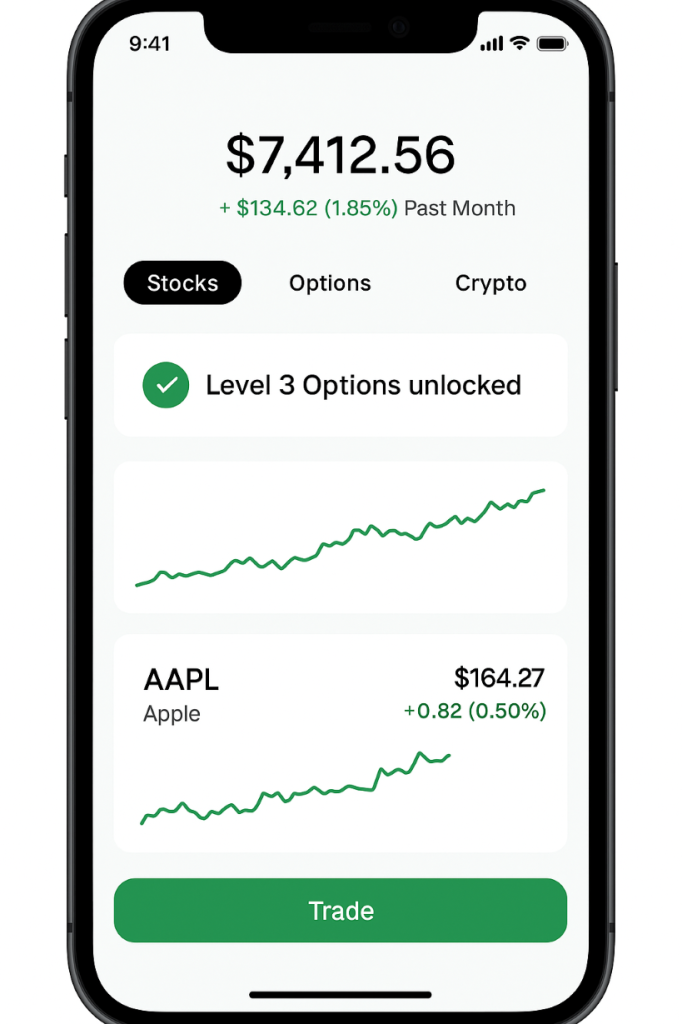
Ready to apply this stuff in a real account? You can start trading with Robinhood with my referral link.
Conclusion
Getting approved for Level 3 options takes confidence, clear answers, and a basic understanding of how spreads work. Once you know what the reps are checking for, the process feels much more manageable. They want to see that you understand risk and can control it with defined-risk trades.
You don’t need fancy terms to get approved. Just show that you know the key ideas and that you plan to use strategies with a clear limit on losses.
Slow down when you answer questions. Be honest about your experience. Stick to the strategies Level 3 allows. When you talk about spreads, risk limits, and the Greeks, you’re speaking the same language Robinhood uses to judge your readiness.
After you’re approved, start small. Watch each position closely for your first few weeks. Use that time to learn how the app handles buying power, collateral, and max loss before you size up.
Level 3 gives you more tools, but success comes from using them with patience and discipline. Close losing trades early instead of hoping they bounce back. The traders who do well at this level treat every position like a decision that matters.
Written by Bryan Smith, creator of Straight From the Call.
I break down earnings calls so you don’t have to. Clear takeaways, no fluff — just the stuff investors care about.
This post is for informational and educational purposes only. It does not constitute financial, investment, or legal advice. Always do your own research or consult a licensed professional before making financial decisions. For the full policy, see our Not Investment Advice & Disclosure Statement
Past approval experiences are anecdotal and do not guarantee future results. Robinhood’s suitability review can change at any time.